Thursday, 16 March 2023

Healthy diet for healthy body

Healthy diet for healthy body

Nuts and seeds are a great addition to a healthy diet as they are rich in essential nutrients such as protein, healthy fats, fiber, vitamins, and minerals. Here are some of the benefits of including nuts and seeds in your diet:

  1. Heart health: Nuts and seeds are rich in monounsaturated and polyunsaturated fats, which can help reduce bad cholesterol levels and improve heart health.
  2. Brain health: Nuts and seeds are also rich in vitamin E, which has been shown to protect against cognitive decline and Alzheimer's disease.
  3. Weight management: Although nuts and seeds are high in calories, studies have shown that including them in your diet can actually help with weight management as they are very filling.
  4. Digestive health: Nuts and seeds are a great source of fiber, which can help improve digestive health and prevent constipation.
  5. Nutrient-rich: Nuts and seeds are a great source of various vitamins and minerals such as vitamin E, magnesium, potassium, and calcium, which are essential for overall health.

Some examples of healthy nuts and seeds include almonds, walnuts, chia seeds, flaxseeds, pumpkin seeds, sunflower seeds, and hemp seeds. It's best to choose unsalted and raw or roasted nuts and seeds to avoid added salt or oils. Additionally, it's important to keep in mind portion sizes as nuts and seeds can be high in calories.

Top 5 Nuts for healthy body

  1. Almonds: Almonds are a great source of vitamin E, fiber, healthy fats, and protein. They also contain magnesium, which is important for bone health and helps regulate blood sugar levels.
  2. Walnuts: Walnuts are a great source of omega-3 fatty acids, which can help reduce inflammation and improve heart health. They also contain antioxidants, fiber, and protein.
  3. Pistachios: Pistachios are a good source of protein, fiber, and healthy fats. They also contain antioxidants and can help improve heart health by reducing bad cholesterol levels.
  4. Cashews: Cashews are a good source of healthy fats, protein, and minerals such as magnesium, zinc, and iron. They also contain antioxidants and can help improve blood sugar levels.
  5. Brazil nuts: Brazil nuts are a great source of selenium, which is important for thyroid function and immune health. They also contain healthy fats, protein, and fiber.

Remember to choose unsalted and raw or roasted nuts and consume them in moderation as they are high in calories.

Top of Form


 Top 5 Seeds for healthy body

Seeds are also a great addition to a healthy diet as they are a rich source of essential nutrients. Here are 5 seeds for a healthy body:

  1. Chia seeds: Chia seeds are a great source of fiber, protein, healthy fats, and antioxidants. They are also high in omega-3 fatty acids, which can help reduce inflammation and improve heart health.
  2. Flaxseeds: Flaxseeds are a good source of fiber, omega-3 fatty acids, lignans, and antioxidants. They may also help lower cholesterol levels and improve digestive health.
  3. Pumpkin seeds: Pumpkin seeds are a great source of magnesium, zinc, and protein. They also contain antioxidants and may help improve heart health and lower blood sugar levels.
  4. Sunflower seeds: Sunflower seeds are a good source of vitamin E, fiber, healthy fats, and protein. They also contain antioxidants and may help lower bad cholesterol levels.
  5. Hemp seeds: Hemp seeds are a great source of protein, healthy fats, and fiber. They also contain minerals such as magnesium, zinc, and iron, and may help improve heart health and reduce inflammation.

Remember to choose raw and unsalted seeds and consume them in moderation as they are high in calories.

Top of Form


Wednesday, 15 March 2023

12 Ways to Promote Long-Term Fat Loss

12 Ways to Promote Long-Term Fat Loss

Adopt a sustainable, balanced diet: Focus on eating whole, nutrient-dense foods in appropriate portions to fuel your body and prevent overeating.

Example:

1.       Protein: Choose lean sources of protein such as chicken, turkey, fish, eggs, tofu, or legumes.

2.       Complex carbohydrates: Include whole grains such as brown rice, quinoa, whole wheat pasta, or oatmeal, and starchy vegetables such as sweet potatoes, squash, or corn.

3.       Healthy fats: Include sources of healthy fats such as avocado, nuts, seeds, olive oil, and fatty fish like salmon or tuna.

4.       Vegetables: Fill half of your plate with non-starchy vegetables such as broccoli, spinach, kale, peppers, or carrots.

5.       Fruits: Include 1-2 servings of fresh fruit per day, such as berries, apples, oranges, or bananas.


  1. Stay hydrated: Drinking enough water helps flush out toxins and can boost your metabolism, helping you burn more calories.
  2. Get enough sleep: Aim for 7-8 hours of sleep per night to support healthy hormone levels, reduce stress, and promote weight loss.
  3. Practice mindful eating: Pay attention to your body's hunger and fullness signals, and avoid distractions like phones or TV while eating to prevent overeating.
  4. Incorporate strength training: Building muscle helps boost your metabolism and burn more calories at rest.
  5. Add in cardio exercise: Regular cardiovascular exercise can help burn fat and improve overall health. Example:

1.       Running or jogging

2.       Cycling

3.       Swimming

4.       Brisk walking

5.       Dancing

6.       High-intensity interval training (HIIT)

7.       Jumping jacks

8.       Kickboxing

9.       Rowing

It's important to choose a form of cardio exercise that you enjoy and can stick with consistently. Aim for at least 150 minutes of moderate-intensity cardio or 75 minutes of vigorous-intensity cardio per week, spread out over several days. You can also combine cardio with strength training for maximum fat loss and overall health benefits.

  1. Reduce stress: High levels of stress can lead to weight gain, so finding healthy ways to manage stress, like meditation or yoga, can help promote long-term fat loss.
  2. Avoid fad diets: Quick-fix diets may offer short-term results, but they are not sustainable and can lead to weight regain over time.
  3. Practice portion control: Eating appropriate portion sizes helps prevent overeating and supports healthy weight loss.
  4. Stay consistent: Consistency is key when it comes to long-term weight loss, so aim to make healthy habits a part of your daily routine.
  5. Surround yourself with support: Having a support system of friends or family members who encourage and motivate you can help you stay on track.
  6. Stay patient: Sustainable weight loss takes time, so be patient and celebrate small successes along the way

This is the 12 simple ways to lose your fat Remember, the key to a balanced diet is moderation and variety. Avoid processed foods, sugary drinks, and excessive amounts of saturated or trans fats. It's important to also pay attention to portion sizes and listen to your body's hunger and fullness signals.

Losing weight in natural way

Losing weight in natural way.

Losing weight in a healthy and sustainable way usually requires a combination of a healthy diet, regular exercise, and consistent lifestyle habits. Here are some tips that may help you naturally lose weight:

  1. Eat a healthy and balanced diet: Focus on eating plenty of fresh fruits, vegetables, lean proteins, and whole grains. Avoid processed and high-calorie foods.
  2. Drink plenty of water: Staying hydrated can help you feel fuller and avoid overeating.
  3. Exercise regularly: Aim for at least 30 minutes of moderate exercise most days of the week. This could be walking, jogging, cycling, or any other form of physical activity you enjoy.
  4. Get enough sleep: Lack of sleep can disrupt your hormones and lead to weight gain. Aim for 7-8 hours of sleep each night.
  5. Practice stress management techniques: Stress can also disrupt your hormones and lead to weight gain. Find ways to manage stress, such as meditation, yoga, or deep breathing exercises.
  6. Avoid sugary drinks: Sugary drinks like soda and juice can be high in calories and contribute to weight gain.
  7. Eat slowly and mindfully: Taking time to savor your food and eating slowly can help you feel fuller and avoid overeating.

It's important to remember that fast weight loss isn't always sustainable or healthy. It's recommended to aim for a


weight loss of 1-2 pounds per week to ensure it's a healthy and sustainable process.


 some exercises that can help you lose fat:

  1. Cardiovascular exercises: These exercises help you burn calories and improve your cardiovascular health. Examples include running, cycling, swimming, brisk walking, and jumping rope.
  2. High-Intensity Interval Training (HIIT): HIIT workouts involve short bursts of intense exercise followed by short rest periods. This type of exercise can be effective for burning calories and fat in a short amount of time.
  3. Strength training: Building muscle through strength training can help you burn more calories throughout the day, even when you're not exercising. Examples include weightlifting, resistance band exercises, and bodyweight exercises like push-ups and squats.
  4. Core exercises: Strengthening your core muscles can help improve your posture and balance, and may also help you burn fat around your midsection. Examples include planks, crunches, and Russian twists.

Healthy drinks for fat loose

here are several healthy drinks that can aid in fat loss when combined with a balanced diet and regular exercise. Here are a few options:

  1. Green Tea: Green tea is rich in antioxidants and contains caffeine, which can boost metabolism and aid in fat loss.
  1. Lemon Water: Lemon water is a low-calorie beverage that can help to boost metabolism and aid in digestion.
  1. Apple Cider Vinegar: Apple cider vinegar can help to reduce appetite and lower blood sugar levels, which can aid in fat loss.
  1. Protein Shake: A protein shake made with high-quality protein powder can help to keep you feeling full and reduce cravings for unhealthy snacks.
  1. Vegetable Juice: Vegetable juices are low in calories and high in nutrients, making them an excellent choice for those looking to lose weight.

 Vegetables for weight loss

including a variety of vegetables in your diet can support your weight loss efforts. Here are five vegetables that can be helpful for weight loss:

  1. Leafy Greens: Leafy greens like spinach, kale, collard greens, and lettuce are very low in calories and high in nutrients. They are also high in fiber which helps you feel full, and support healthy digestion.
  2. Broccoli: Broccoli is a cruciferous vegetable that is low in calories and high in fiber. It is also a good source of vitamins and minerals like Vitamin C, which can support healthy immune function.
  3. Bell Peppers: Bell peppers are high in Vitamin C, fiber and antioxidants which can supp
    ort a healthy metabolism. They are also low in calories and versatile in cooking.
  4. Cauliflower: Cauliflower is low in calories and high in fiber, and is a great substitute for higher calorie options like rice or mashed potatoes. It is also a good source of vitamins and minerals.
  5. Carrots: Carrots are low in calories and high in fiber, making them a great option for weight loss. They are also a good source of Vitamin A, which supports healthy skin and eye function.


Monday, 13 March 2023

Healthy Way of Living

Healthy Way of Living

Living a healthy lifestyle involves adopting habits and behaviors that promote physical, mental, and emotional well-being. Here are some general tips for maintaining a healthy way of living:

  1. Eat a balanced and nutritious diet: Include a variety of fruits, vegetables, whole grains, lean proteins, and healthy fats in your diet. Avoid processed and sugary foods
  2. Stay physically active: Engage in regular exercise or physical activity for at least 30 minutes a day, most days of the week. This can include activities like walking, jogging, swimming, cycling, or weightlifting.
  3. Get enough sleep: Aim for 7-8 hours of quality sleep each night. Create a relaxing sleep environment and establish a consistent sleep schedule.
  4. Manage stress: Practice stress-reducing techniques like meditation, deep breathing, or yoga. Take time for activities that you enjoy and that help you relax.
  5. Avoid unhealthy habits: Avoid smoking, excessive alcohol consumption, and drug use.
  6. Stay socially connected: Maintain meaningful relationships with family and friends. Join clubs or organizations that interest you.
  7. Practice good hygiene: Wash your hands regularly, cover your mouth and nose when you cough or sneeze, and maintain good dental and personal hygiene.

Remember, making small, gradual changes to your lifestyle can lead to significant improvements in your overall health and well-being over time.

5 HEALTHY FRUITS FOR HEALTHY LIFE STYLE

There are many fruits that are considered healthy because they are packed with vitamins, minerals, antioxidants, and other nutrients that are essential for maintaining good health. Here are the top 5 healthy fruits:

  1. Blueberries: Blueberries are loaded with antioxidants that protect your cells from damage and inflammation. They are also high in fiber, vitamin C, vitamin K, and manganese.
  2. Apples: Apples are rich in fiber, vitamins, and minerals. They contain antioxidants that can help lower the risk of chronic diseases, such as heart disease and cancer.
  3. Kiwi: Kiwis are packed with vitamin C, fiber, and antioxidants. They are also a good source of potassium, which can help lower blood pressure.
  4. Oranges: Oranges are high in vitamin C, folate, and potassium. They also contain flavonoids, which have anti-inflammatory and antioxidant properties.
  5. Bananas: Bananas are a good source of fiber, potassium, vitamin C, vitamin B6, and antioxidants. They can help regulate blood sugar levels and promote digestive health.

Of course, this list is not exhaustive and there are many other healthy fruits to choose from, such as strawberries, papaya, mangoes, and grapes. It's important to eat a variety of fruits as part of a healthy and balanced diet.

VEGITABLES  FOR HEALTHY  LIFE STYLE

Eating vegetables is an important part of a healthy diet. They are rich in vitamins, minerals, fiber, and antioxidants that promote good health and reduce the risk of chronic diseases. Here are some of the healthiest vegetables:

  1. Spinach: Spinach is packed with nutrients, including vitamins A, C, and K, iron, calcium, and fiber. It also contains flavonoids that have anti-inflammatory and antioxidant properties.
  2. Broccoli: Broccoli is a cruciferous vegetable that is rich in fiber, vitamin C, vitamin K, and potassium. It also contains sulforaphane, a compound that has anticancer properties.
  3. Kale: Kale is another leafy green vegetable that is loaded with nutrients, including vitamins A, C, and K, calcium, and antioxidants. It also contains glucosinolates, which have anti-inflammatory and anticancer properties.
  4. Carrots: Carrots are a good source of beta-carotene, a precursor to vitamin A that is important for eye health. They are also rich in fiber, vitamin K, and potassium.
  5. Sweet potatoes: Sweet potatoes are high in fiber, vitamin A, vitamin C, and potassium. They also contain antioxidants that can help reduce inflammation and protect against chronic diseases.
  6. Brussels sprouts: Brussels sprouts are another cruciferous vegetable that is rich in fiber, vitamin C, vitamin K, and antioxidants. They also contain glucosinolates, which have anticancer properties.

Of course, this list is not exhaustive, and there are many other healthy vegetables to choose from, such as cauliflower, asparagus, peppers, and tomatoes. It's important to eat a variety of vegetables as part of a healthy and balanced diet.

Top of Form

Top of Form

PHYSICAL ACTIVITY FOR HEALTHY LIFE

Regular physical activity is essential for maintaining a healthy lifestyle. It can help you maintain a healthy weight, reduce the risk of chronic diseases, improve cardiovascular health, boost mood and energy levels, and improve overall quality of life. Here are some physical activities that you can do to stay active and healthy:

  1. Aerobic exercise: Aerobic exercise, also known as cardio, is any activity that increases your heart rate and breathing. This includes activities like brisk walking, jogging, cycling, swimming, and dancing.
  2. Strength training: Strength training involves using weights or resistance to build muscle and increase strength. This can include exercises like lifting weights, using resistance bands, or doing bodyweight exercises like push-ups and squats.
  3. Yoga or Pilates: Yoga and Pilates are low-impact exercises that focus on building flexibility, strength, and balance. They can also help reduce stress and improve mental clarity.
  4. Sports: Participating in sports like basketball, soccer, or tennis can be a fun way to stay active while also improving cardiovascular health and building endurance.

  5. Walking or hiking:
    Walking or hiking is a simple and low-impact way to stay active. You can start by taking short walks around your neighborhood and gradually increase the duration and intensity of your walks.

Remember, the key to staying active is to find activities that you enjoy and that fit into your lifestyle. Aim to get at least 30 minutes of moderate-intensity physical activity most days of the week, and try to incorporate a variety of activities into your routine for maximum health benefits.

Top of Form


Tuesday, 28 June 2022

Benefits of Honey

Benefits of Honey

Honey is a sweet liquid made by bees using nectar from flowers. People throughout the world have hailed the health benefits of honey for thousands of years.

The Top 6 Raw Honey Benefits

1. A good source of antioxidants

2. Antibacterial and antifungal properties

3. Heal wounds

4. Phytonutrient powerhouse

5. Help for digestive issues

6. Soothe a sore throat


Best Time To Eat Honey:

  1. When You Feel Tired: A natural source of carbohydrates, eat honey whenever you need an energy rush. It is ideal to consume honey before or after a workout.
  2. After Sleep: Eat 1 or 2 teaspoons of honey right After sleep. Honey enhances your pure energy.
  3. Whenever You Are Sick: Known for its ability to treat cough and cold, honey works as natural over-the-counter medicine.

Honey is safer than Sugar

There has been a lot said about the negative effect of white sugar on the body. Honey is a great substitute that is as sweet but also safe to consume. Though honey also includes simple sugars in its chemical makeup, it is quite different from white sugar in that it contains about 30% glucose and 40% fructose – two monosaccharide or simple sugars – with 20% other complex sugars. Honey also includes dextrin, a starchy fiber. This combination helps the body regulate blood sugar levels.

Types of Honey

There are mainly 10 types of honey are availavale in market

raw honey
  1. Manuka honey: It is rich in vitamin B1, B2, B3, B5 and B6 with a robust taste. It helps in treating sore throat and cold.
  2. Acacia honey: It is rich in vitamin A, C and E with a floral taste. It helps in treating respiratory problems.
  3. Buckwheat honey: It is darkest and strongest of all varieties with rich in iron content. It helps in protecting the body from oxidative stress.
  4. Clover honey: It is a popular variety with pleasant taste. It is used in salad dressings and sauces.
  5. Eucalyptus honey: It is rich in minerals and vitamins with herbal flavor. It is a used for medicinal purposes
  6. Sourwood honey: It is a light-colored honey with caramel taste and sweet and nutty flavor.
  7. Tupelo honey: A sweetest honey variety with light-golden in color. Due to the presense of high-fructose content it results in the sweetness.
  8. Sage honey: A light-colored honey with a delightful taste which granulates very slowly.
  9. Linden Honey: It is a popular variety with Fresh woody aroma which indeed induces sedation. It helps in treating cold and cough.
  10. Aster Honey: A variety of honey with thick consistency and distinctively sweet aroma. It is usually used in sweet drinks and desserts.

Monday, 9 May 2022

Ayurveda

Ayurveda


(Ayurveda means the science of life.)
       The origin of Ayurveda dates back to the Vedic era. Most material relating to the health and diseases are available in Atharva veda. Historians claim that Ayurveda is a part of Atharva Veda. However RigVeda which is the earliest Veda also mentions about diseases and medicinal plants.
Who was the father of Ayurveda?
Ayurveda is attributed to Dhanvantari, the physician to the gods in Hindu mythology, who received it from Brahma. Its earliest concepts were set out in the portion of the Vedas known as the Atharvaveda (c. 2nd millennium bce
When was Ayurveda started?
Originally shared as an oral tradition, Ayurveda was recorded more than 5,000 years ago in Sanskrit, in the four sacred texts called the Vedas: the Rig Veda (3000-2500 BCE), Yajur Veda, Sam Veda, and Atharva Veda (1200-1000 BCE).

Ayurveda treatment starts with an internal purification process, followed by a special diet, herbal remedies, massage therapy, yoga, and meditation.
The concepts of universal interconnectedness, the body's constitution (prakriti), and life forces (doshas) are the primary basis of ayurvedic medicine. Goals of treatment aid the person by eliminating impurities, reducing symptoms, increasing resistance to disease, reducing worry, and increasing harmony in life. Herbs and other plants, including oils and common spices, are used extensively in Ayurvedic treatment. 
Your Constitution and Its Inner Balance:
Ayurveda places great emphasis on prevention and encourages the maintenance of health through close attention to balance in one’s life, right thinking, diet, lifestyle and the use of herbs. Knowledge of Ayurveda enables one to understand how to create this balance of body, mind and consciousness according to one’s own individual constitution and how to make lifestyle changes to bring about and maintain this balance.

Just as everyone has a unique fingerprint, each person has a particular pattern of energy—an individual combination of physical, mental and emotional characteristics—which comprises their own constitution. This constitution is determined at conception by a number of factors and remains the same throughout one’s life.

Many factors, both internal and external, act upon us to disturb this balance and are reflected as a change in one’s constitution from the balanced state. Examples of these emotional and physical stresses include one’s emotional state, diet and food choices, seasons and weather, physical trauma, work and family relationships. Once these factors are understood, one can take appropriate actions to nullify or minimize their effects or eliminate the causes of imbalance and re-establish one’s original constitution. Balance is the natural order; imbalance is disorder. Health is order; disease is disorder. Within the body there is a constant interaction between order and disorder. When one understands the nature and structure of disorder, one can re-establish order.

Saturday, 30 April 2022

Shambhavi Mahamudra

What is Shambhavi Mahamudra?


Shambhavi Mahamudra is an integrative system of several breathing techniques that incorporate multiple limbs of traditional Raja Yoga or the yoga described by Patanjali in the Yoga Sutras.29 The Shambhavi Mahamudra practice is taught by a nonprofit international humanitarian organization.
Steps to do Shambhavi Mahamudra:
follow this step to do shambhavi mudra--
1. Sitting posture: Start by sitting in a meditative pose. It is siddhasana or padmasana. The place where you practice should be very quiet.Straighten your head and spine. 
2.Hand pose: pose in Gyan mudra. Your hands should be placed firmly on your kneecaps.
3.Main part: Close your eyes and relax your body including eyes, face muscles, forehead, and even behind the eyes.
Open your eyes gradually and try to fix them at a the middle of your two eyes.Concentrate on it no matter what thought come.
Best timing :Morning in empty stomach and evening sunset time around 5:20 to 6:30 is the best time . Bramhamuharat is the best time to do Shambhavi Mahamudra (3:30 to 4:30). This time the nature help you .

Benefits of Shambhavi Mahamudra

Shambhavi Mahamudra has a lot of benefits. Its benefits is almost countless. But there are some important benifits.....

Clear Eyesight:- When you are practicing Shambhavi daily , you will observe that your eyesight will improve after sometime. You can see everything clearly.

Reduce Stress:- After doing shambhavi mudra daily your body and mind fully fil with clam, your all stress are gone.

Effect on Nuron :-Shambhavi Mudra benefits your mind and enhances your brain ability. 

psychic power :-This mudra also helps to develop psychic power. This mudra helps to improve interpersonal communication skills. It helps to create a heightened level of insight.

You will easily handle your emotions :-. Now when you have do this mudra for a long time, a major benefit of this is that you will be able.

Active Chakra :-Shambhavi Mudra benefits to energize and activate the third eye chakra also known as Ajna Chakra.

Bring you to enlightenment :- When you practice Shambhavi Mahamudra daily, after a long period of time when you have been some sort of mastery in most of the different aspects of physical body, after then this kriya will bring you to enlightenment.

Tuesday, 29 March 2022

Dhanurasana

DHANURASANA: 

Dhanus means a bow in Sanskrit. This is called Dhanurasana because when the full pose is demonstrated, it resembles a bow with a string in it. The hands and the legs represent the string, whereas the trunk and the thighs take the place of the bow.

Steps:

  1. As you did in the previous two poses, lie on the blanket face down. Relax all the muscles of the body.
  2. Bend the legs slowly at the knee-joint until the hands catch hold of the ankles.
  3. Raise the head, chest and knees. Keep the arms and the forearms stiff end straight.
  4. Try to keep the knees close together.
  5. Now the whole body rests on the abdomen A good convex arch is formed resembling a bow with a string.
  6. You can either breathe as usual or retain the breath according to your convenience.
  7. Remain in this pose as long as you can comfortably do so. When you have done this, lower the knees and the chest first. Then bring the hands and legs down and stretch flat on the ground


Timing: .

Morning or evening at 5 to 6 pm is the best time to do this yuga pose. Do this Asana four to six times.


 Benefits:

  1. Asana gives the full benefits of both Bhujangasana and Salabhasana.
  2. The abdominal region gets a good massage. By rocking and swinging the bow-shaped body from side to side, forward and backward, a thorough massage and exercise to the abdomen is ensured.
  3. Chronic constipation, dyspepsia, sluggishness of the liver, rheumatism of the legs, knee-joints
    and the hands, gastro-intestinal disorders are all prevented and cured.
  4. Ladies desirous of undergoing a course of slimming will do well to try this Asana first.
  5. Dhanurasana keeps the spine strong and elastic.
  6. You will bubble with untiring energy, vigour and vitality. Everlasting youth is yours.

Salabhasana


SALABHASANA: (THE LOCUST POSE)

Salabha means a locust in Sanskrit. When this pose is demonstrated, it gives one the appearance of a locust.

Steps: Lie on the blanket face down and the arms touching the ground.

Let the palms face upwards with the fingers clenched. Inhale slightly.

Then stiffen the whole body and raise the legs the hips and the lower abdomen up. putting the whole weight of the body on the chest and the hands. Raise the head also slightly.

*Remain in this pose for 10 seconds in the beginning and prolong the time little by little as long as you can retain the breath.

Bring the legs down slowly, relax the muscles of the whole body and exhale. Repeat this pose four or five times taking care to see that the lungs are not unduly strained.

*( Some specialists in Hatha-Yoga recommend the resting of the chin, mouth and nose on the ground, whilst some others the chin alone.)


Timing: : Morning or evening at 5 to 6 pm is the best time to do this yuga pose.

 Benefits: This posture bends the spine backwards and gives intra-abdominal pressure.

While Bhujangasana exercises the upper part of the body, Salabhasana develops the lower half of the body.

It relieves constipation and tones the liver, pancreas and the kidneys. Several other diseases of the stomach are also removed.

It is highly beneficial to persons suffering from lumbago.

It increases the digestive fire removes dyspepsia and promotes good appetite.

A high standard of vitality and strength is assured.

Bhujangasana

BHUJANGASANA: (THE COBRA POSE)

Bhujanga means a cobra in Sanskrit. This pose is called Bhujangasana because when the full pose is displayed, it lends one the appearance of a hooded cobra.


Steps:

  1. Spread a blanket on the ground. Lie on it face down and the muscles of the body completely relaxed. Place the palms on the ground just below the shoulders, bending them in the elbows.
  2. Touch the ground with the forehead and raise the head and the upper part of the body slowly just as a cobra raises its hood.
  3. Bend the spine backwards. Let the lower part of the body from the navel downwards right up to the toes touch the ground.
  4. Breathe normally through the nose. Retain the breath till the head is raised and the spine bent nicely. Then again exhale.
  5. Then retain the breath while bringing the head down and as soon as the head touches the ground, slowly inhale again.
  6. Repeat this process of raising the head and bringing it down half a dozen times or more.

Timing: Morning or evening at 5 to 6 pm is the best time to do this yoga pose.

 Benefits:

  1. This is another good exercise for the spine. The spine becomes flexible and elastic.
  2. Rigidity and fatigue of the back are removed. Hunch-back, back pain, lumbago and myalgia of the back are relieved.
  3. Bhujangasana increases the intra-abdominal pressure and removes constipation.
  4. It augments appetite by increasing bodily heat and destroys a host of other ailments.
  5. This pose is specially useful for ladies to tone the ovary and uterus. It is a powerful tonic. Absence of menstruation (amenorrhoea), painful menstruation (dysmenorrhoea), whites (leucorrhoea) and various other utero-ovarine diseases are removed
  6.  

Monday, 28 March 2022

Matsyasana

 MATSYASANA:

This pose is called Matsyasana because by assuming this posture and doing Plavini Pranayama you can float like the fish on water as long as you like

Steps:

  1. Spread a thick blanket on the ground. Sit on it with legs fully stretched in front of you. Do Padmasana. 
  2. Then lie flat on the back. 
  3. Then resting the whole body on the elbows raise the trunk and head.
  4. Pressing the head well on the ground on the one side and the buttocks on the other, make an arch or a bridge of the trunk. 
  5. Rest the hands on the thighs or catch hold of the toes the right hand holding the left toe and the left hand the right toe.


Timing:

Practise this Asana soon after Sarvangasana for one third of the time you devote to the latter, if you want the maximum benefits. Sarvangasana and Matsyasana go hand in hand. They must always be
practiced one after the other. When you have finished doing this Asana, slowly release the head with the help of the hands, sit erect and unlock the foot-lock.

Benefits: 

  1. Matsyasana gives a soothing massage to the neck and the shoulders. 
  2. The stiffness of the neck is removed. 
  3. Matsyasana helps deep breathing. 
  4. The cervical and upper dorsal nerves are abundantly nourished with blood and toned up nicely. 
  5. The endocrine the pituitary and the pineal glands located in the brain are stimulated and toned. These glands play a vital part in the proper functioning of the various systems of the human body. 
  6. Matsyasana is also the destroyer of many diseases. It cures constipation, asthma, consumption, chronic bronchitis, epilepsy, a certain type of obesity, the evil effects of masturbation, excessive sexual indulgence and waste of seminal powers, and is said to have cured leprosy also. 
  7. It dispenses with the transplantation of monkey-thyroids to human beings for rejuvenation. Enlargement of the spleen is cured. 
  8. Lost manhood, wasted vitality and misspent energy could be effectively regained by the assiduous practice of this posture. 
  9. The heart is also massaged and you feel new and young.

Sarvangasana

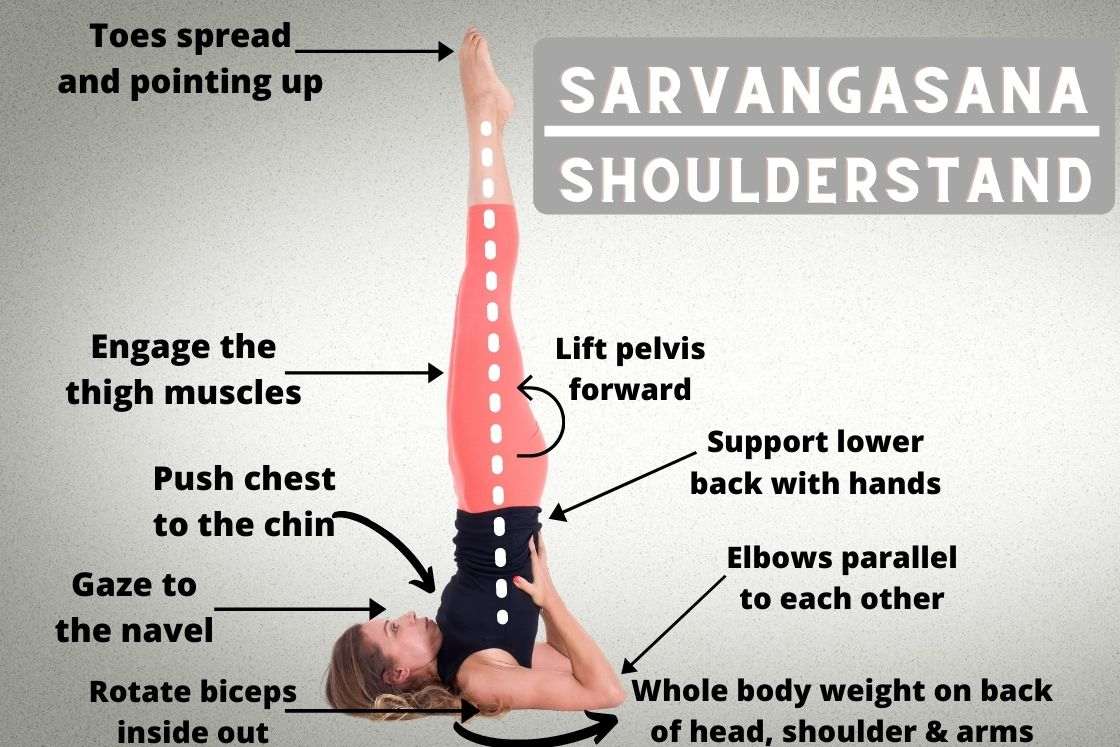
SARVANGASANA: (ALL-MEMBERS POSE)

It is so called because all parts of the body function during its performance.

Steps:

  1. Spread a thick blanket on the ground.
  2. Lie flat on your back. Then slowly raise the legs up, lifting the trunk and the hips vertically.
  3. Let the two hands support the back at the hips. Let the elbows rest on the ground.
  4. Form a chin-lock by firmly pressing the chin against the chest.
  5. In this posture the hinder part of the neck lies on the ground, and the trunk and legs stand in a straight line.
  6. Concentrate the mind at the thyroid gland that is situated at the root of the neck.


Timing: Do this for 2 minutes to start with and increase the time to half an hour. Let the breathing be normal during the whole process.

Benefits:  

  1. Sarvangasana will build for you a healthy thyroid. A healthy thyroid means healthy functioning of all organs of the body.
  2. This pose centralises the blood in the spinal column and feeds it abundantly.
  3. It keeps the spine strong and elastic. You will have everlasting youth.
  4. It helps you not a little in keeping up Brahmacharya. It checks wet-dreams and rejuvenates the impotent.
  5. It is a blood and nervine tonic too.
  6. It removes dyspepsia, constipation and several other gastro-intestinal disorders.
  7.  The benefits you derive from Sirshasana are also derived from Sarvangasana.
  8. A course of Sirsha-Sarvangasana will cure leprosy, powerfully rejuvenate the body and dispense with monkey-gland grafting.

Healthy diet for healthy body

Healthy diet for healthy body Nuts and seeds are a great addition to a healthy diet as they are rich in essential nutrients such as protein,...